Newsletter from 07.02.2026
Dear interested parties in the precious metals markets,
What's going on with silver? Even experienced market observers had to ask themselves this question at the end of January and beginning of February 2026. Within just a few days, the price of silver shot past the USD 100 mark, reaching an all-time high of USD 121.6 per ounce on January 29 before plummeting by more than a quarter the next day - the heaviest daily loss since 1982.
Reports from news agencies such as Reuters and Bloomberg painted a picture of a market that had temporarily lost all traction. Technical selling, stop-loss cascades and extreme volatility dominated events before the price settled back in the range of USD 75 to just under USD 80 at the beginning of February. Measured by traditional valuation standards, this movement could hardly be explained rationally.
The extreme rally before the crash was driven less by new fundamental findings than by speculative euphoria. Ole Hansen from Saxo Bank spoke openly of a massive „retail frenzy“. „Fear-of-missing-out“ purchases by private investors, high inflows into physically backed silver ETFs and a historic short squeeze distorted the market structure. Dealers such as APMEX reported record turnover and temporarily introduced minimum trading sizes. At the same time, a „memefication“ of the market made itself felt, which strategists at Bank of America warned about early on: social media hype replaced sober analysis. CFTC data shows that major market participants became more cautious even before the peak: hedge funds drastically reduced their net long positions even before the crash.
The abrupt crash at the beginning of February then had more classic triggers. Increased margin requirements by the CME Group, a firmer US currency and forced liquidations of highly leveraged positions set off a wave of selling. This was accompanied by renewed accusations of manipulation and rumors - for example about alleged export bans or night-time spoofing, as reported by the blog Inside Paradeplatz.
Reliable evidence is still lacking and there is much to suggest that the slump was primarily the correction of a previously overstretched speculative bubble. However, this does not change the long-term perspective: structural supply deficits and strong industrial demand remain intact. The development was exaggerated in the short term - but the silver market is by no means discredited in the coming years.
From now until the ZFE 2026, we will inform you once a week about the most important developments relating to the event and the precious metals markets.
With best regards from Frankfurt
Wolfgang Wrzesniok-Roßbach & Corinna Schmitz
for the organization team of the FutureForum Precious Metals
Topic of the week: The deal of a lifetime - but what comes next?
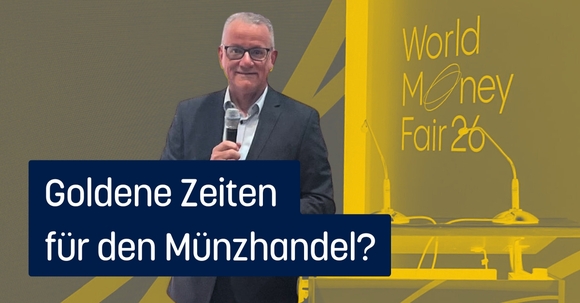
Last week, the numismatic community met in Berlin - the „World Money Fair“, the largest coin fair in the world, opened its doors. The impact of the rise in precious metal prices on mints and distributors around the world was eagerly awaited. The picture was clear: most coin dealers are currently doing the business of their lives - but many are concerned about the medium to long-term outlook. At the moment, many dealers can still sell goods out of stock that they have bought at more favorable precious metal prices. Due to the rise in the price of gold, even products that were not in high demand until a year or two ago are now being sold.
However, there is also a flip side to the coin in view of the precious metal boom: the rise in the value of the material is increasingly forcing producers to switch to smaller denominations or to overcome price thresholds that were previously considered the pain threshold. Where once the whole ounce was the measure of all things, coin producers are increasingly relying on half or quarter ounces. In the gold sector, distributors are increasingly accustoming their customers to weight units such as „1/100th of an ounce“. In traditional precious metal investment, investors have long since switched from ounces to half ounces and then to 20-gram gold bars, while the focus is now shifting to 10-gram denominations.
For private investors, the World Money Fair was a rollercoaster of emotions anyway - while the prices of gold and silver were still rising on Thursday, the permanent visitors woke up on Friday with double-digit losses. In the meantime, the silver price chart showed a drop of 30 percent. During the presentations by Wolfgang Wrzesniok-Roßbach, founder of ZukunftsForum Edelmetalle, on the „Livestage“ of the World Money Fair, however, the audience remained level-headed - the opinion on the rollercoaster ride on the precious metals market was unanimous: the recent development was unhealthy, gold and silver had to correct - and the current level is seen as an entry opportunity.
Our thanks go to the trade fair team led by Götz-Ulf Jungmichel and Luisa Krüger for another convincingly organized World Money Fair. The fair has established itself as the central international meeting place for numismatics and brings together mints, dealers and collectors every year. With the FutureForum Precious Metals, we have established an additional conference format aimed at family offices, institutional investors and asset managers, analysts, journalists, recycling service providers and the precious metals consuming industry as well as providers of exchange-traded and electronically supported investment products.
Both platforms share a similar goal: to promote exchange within the precious metals and coin industry and to classify current market developments. While the World Money Fair makes the market visible in its entirety, the FutureForum Precious Metals focuses specifically on in-depth analysis, discussion and classification of economic and structural issues relating to gold and silver. In terms of content, the two events complement each other.
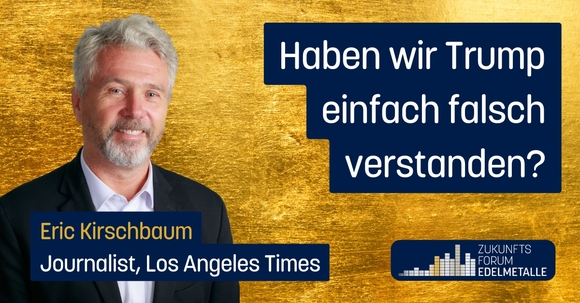
Speaker of the week: Eric Kirschbaum (Journalist, Los Angeles Times)
The United States is once again in a phase of political escalation, the effects of which extend far beyond its own borders. With Donald Trump's second term in office, there is a noticeable shift in political priorities, institutional scope and international role models. Trade policy, security issues, industrial policy and the handling of strategic raw materials are once again being considered more nationally - with direct consequences for global supply chains, financial markets and political alliances.
This presents Europe, and Germany in particular, with a new starting position. Years two to four of the presidency will be less about short-term irritations and more about structural adjustments: How resilient are transatlantic relations under a US president who is skeptical of multilateralism? How important are raw materials, energy and strategic metals in a policy that prioritizes economic sovereignty? And how will the global balance of power and dependency change if the US starts using trade policy instruments more aggressively again?
The markets do not react to these developments in a linear fashion. Political signals from Washington are increasingly acting as price drivers or dampeners, particularly where commodities are relevant to security or industrial policy. Tariffs, export restrictions, subsidy programs and geopolitical tensions are overriding traditional supply and demand factors. This makes it more difficult for investors, companies and political decision-makers to distinguish between short-term rhetoric and decisions that have a long-term impact.
Eric Kirschbaum, US journalist and experienced foreign correspondent, stands for this political and media classification. He has been working as a freelance journalist since 2015, including for the Los Angeles Times. He previously worked for Reuters for many years, including in Frankfurt and Berlin, with a clear focus on politics and business. Kirschbaum combines a US-American inside perspective with a deep understanding of European interests and transatlantic tensions.
The focus of his contribution is not on the daily headlines, but on the political logic behind the Trump administration's decisions: What guidelines shape US policy beyond the public escalation? Which changes of course are real, which are tactically motivated? And what does this mean in concrete terms for Germany, Europe and commodity-related markets - from energy and industrial metals to precious metals as a politically sensitive asset?
Why this topic shapes the framework of the FutureForum Precious Metals
The ZukunftsForum Edelmetalle deliberately focuses on classification rather than alarmism. The question of the political direction of the USA is central to this because it has a direct impact on trade flows, the availability of raw materials, pricing and geopolitical risk premiums. A journalistically sound, transatlantically grounded perspective helps to separate political narratives from reliable trends. It thus creates the basis for looking at precious metals and commodities not in isolation, but as part of a political and economic system that is noticeably undergoing change - which is precisely why it needs to be discussed intensively in Frankfurt in March 2026.
Our partners: World Gold Council
The World Gold Council is a globally active, non-profit industry organization of the international gold industry based in London (United Kingdom). The WGC was founded in 1987 by leading gold mining companies and today brings together numerous major producers who together represent a significant proportion of global gold production. The aim of the World Gold Council is to strengthen the use of gold in various areas, for example as an investment, jewelry material or technological raw material, and to support the industry with sound data and analyses.
The central task of the World Gold Council is to stimulate and sustain demand for gold by acting as an interface between producers, investors, governments and other market participants. This includes providing market data, research, analysis and commentary on supply and demand trends, price movements and gold-related financial products. The Council is also involved in topics such as responsible mining, sustainability and market transparency. Regular publications such as the „Gold Demand Trends“ report or data on central bank reserves serve as important sources of information for market players.
The special significance of the WGC results from its effective role in the global gold market: as a recognized authority, the World Gold Council provides reliable data and analyses that investors, financial institutions, political decision-makers and economic players use to assess gold as an investment and commodity. It helps to set market standards, develop new products such as gold-based exchange-traded funds (ETFs) and ensure transparency and trust in global markets. Through its work, the Council significantly influences the perception and use of gold in the economy and financial system.
The FutureForum Precious Metals as a forum - for you too!
The FutureForum Precious Metals offers companies and institutions the opportunity to present themselves as partners and play an active role in shaping the event. Partnerships enable visibility in front of a highly relevant specialist audience, prominent placement in the communication channels and access to exclusive exchange formats. Would you like to help shape the future of the precious metals market and contribute your expertise in a professional environment? We look forward to hearing from you and will be happy to introduce you to the various models.
- Be there as a partner or exhibitor: Find out more about the ZukunftsFoum Edelmetalle 2026.
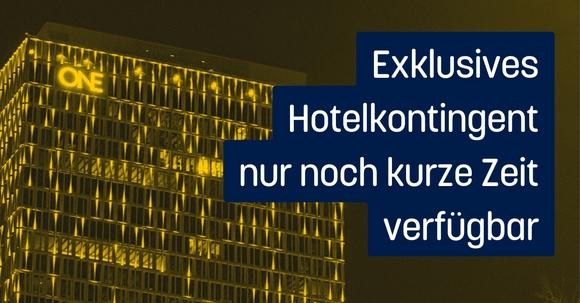
Book now: Exclusive hotel contingent for the FutureForum Precious Metals 2026 only available for a short time
Tickets for the ZukunftsForum Edelmetalle 2026, which will take place on March 23 and 24, 2026 with a preliminary program on March 22, are now available for purchase - and we have an additional benefit for our guests: when you book your ticket, you will receive a link that will give you access to the limited room contingent at our partner hotels, either NH Collection Frankfurt Spin Tower or nhow Frankfurt. Take the opportunity to book your hotel room at the exclusive event rate of just 139 euros including breakfast directly after purchasing your ticket!
Keeping an eye on things: News from the FutureForum Precious Metals
Whether new trends in the precious metals market, exciting background reports or information on upcoming events - we keep you informed throughout the year about everything that moves the industry.
On our LinkedIn channel we regularly publish exclusive insights, event information, expert interviews and the latest market observations. Follow us to make sure you never miss a post and stay in touch with the community.
Our newsletter is even more direct: here you receive selected first-hand information - compact, up-to-date and relevant for anyone who deals with precious metals either professionally or privately.
Partners - News from our supporters
We would like to expressly thank our strong industry partners at the FutureForum Precious Metals 2026, whose commitment has made an active contribution to being able to offer participants a program that is unique in this form in the DACH region.