Newsletter from 19.02.2026
Dear interested parties in the precious metals markets,
The record price of gold - a curse or a blessing for the jewelry industry? We will be exploring this question in several presentations at INHORGENTA on February 20 and 21 in Munich. At the invitation of SHZ - Hanauer Schmuckhalbzeug GmbH, a subsidiary of Bauer-Walser AG, we will be examining various aspects of the current market development with a particular focus on the jewelry industry.
Current figures suggest that the price rally is putting pressure on demand from the industry. The World Gold Council (WGC) reports a global demand for jewelry of 1,542.3 tonnes in 2025 (down 18% compared to 2024), a five-year low. At the same time, the value of jewelry demand rose to a record USD 172 billion (up 18%). At 441 tons, the fourth quarter of 2025 was even a record low compared to the same quarter of the previous year. The two largest jewelry markets are primarily behind the global decline: India (430.5 tons, down 24%) and China (360.1 tons, down 25%).
From now until the ZFE 2026, we will inform you once a week about the most important developments relating to the event and the precious metals markets.
With best regards from Frankfurt
Wolfgang Wrzesniok-Roßbach & Corinna Schmitz
for the organization team of the FutureForum Precious Metals

Topic of the week: Will February 24 be the turning point for gold and silver?
Even though a correction and consolidation in gold and silver was overdue after the rapid rise up to January 30, 2026, many market participants are puzzling over the reasons for the sudden countermovement downwards - and once again a player comes into play that has already been identified as the trigger for extreme market movements in the past: China.
The country is one of the world's most important markets for physical precious metal trading - and regular exchange operations are currently suspended around the Chinese New Year. The Shanghai Gold Exchange and the Shanghai Futures Exchange are closed for several days, and many wholesalers, refineries and logistics service providers are only operating to a limited extent. This undoubtedly means that a central liquidity and demand pole in Asia is missing. Global price formation is shifting more strongly to London and New York, while less impetus is coming from the Asian time zone. The result is thinner turnover and often a wait-and-see, sideways market phase.
However, this „lull“ is due to technical reasons and not necessarily fundamental. China is a major player in the jewelry and bullion markets as well as in the futures market. If this trading center temporarily shuts down, arbitrage activities between Shanghai, London and New York are reduced. At the same time, physical purchases and restocking are often postponed. Market participants refer to such phases as „thin trading“ - smaller orders can cause larger price swings, while sustainable trends are usually absent as long as a significant demand market is not active.
Many observers expect a bullish scenario for the resumption of trading on February 24, when wholesalers and investors catch up on their purchases. In conjunction with international factors, such as a weaker US dollar or falling interest rate expectations, the return of Chinese market participants would increase global liquidity and strengthen upward momentum. In retrospect, the current sideways phase would then merely be a technical pause for breath before a new upward movement.
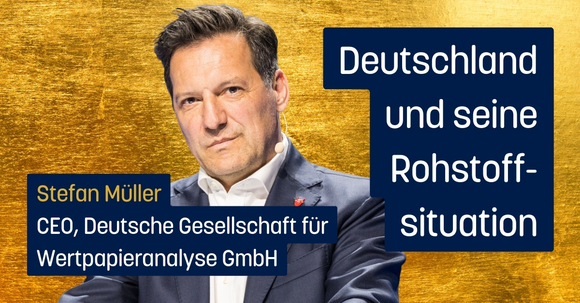
Speaker of the week: Stefan Müller, DGWA Deutsche Gesellschaft für Wertpapieranalyse GmbH
As an industrialized nation, Germany is highly dependent on stable raw material supply chains - but only has limited deposits of its own. At the same time, geopolitical tensions, the strategic industrial policy of large economic areas and the global energy transition are intensifying competition for critical metals and mineral raw materials. Security of supply is therefore no longer a purely economic issue, but part of fundamental security and industrial policy decisions.
Against this backdrop, the key strategic question arises anew: How resilient is Germany's supply of raw materials? The restructuring of energy and mobility systems, the expansion of digital infrastructure and the defense sector are significantly increasing the demand for lithium, nickel, rare earths, copper and other key materials. At the same time, the extraction and processing of many of these raw materials is concentrated in just a few countries. Dependencies are shifting - away from fossil fuels and towards mineral resources.
For Germany and Europe, this means that raw materials policy can no longer be reactive. Diversification of supply sources, promotion of domestic projects, strategic partnerships, recycling strategies and the strengthening of value chains within Europe are becoming key fields of action. This is not just about access to deposits, but also about financing, approval processes, ESG standards and capital market access for exploration and mining projects.
Stefan Müller, CEO of DGWA based in Frankfurt am Main, represents this interface between the capital market, industry and politics. DGWA is an investment banking company active in the global commodities sector and supports companies in the structuring, development and financing of mining and commodities projects. Müller has around 30 years of experience in this field and also works as a consultant for politicians, associations and international companies - with the aim of helping to shape a coherent German and European raw materials strategy.
His contribution focuses on the systemic perspective: What are the structural weaknesses of the German raw materials supply? What role can capital markets play in financing European projects? And how can economic interests, sustainability requirements and geopolitical realities be translated into a viable strategy? It becomes clear that raw material security is less a question of short-term price movements than of setting a long-term industrial policy course.
Why this topic shapes the framework of the FutureForum Precious Metals
The FutureForum Precious Metals does not discuss commodities in isolation as an asset class, but as a strategic factor of economic stability. Germany's commodities situation is a central point of reference here, as it exemplifies how closely industrial competitiveness, geopolitical capacity to act and capital market structures are interwoven. The classification by a practitioner from the international commodity financing environment expands the debate to include the operational and strategic dimension - and thus creates the basis for a realistic assessment of the future of European commodities.

Our partners: C.HAFNER (Premium Program Partner)
C.HAFNER is one of the oldest and most important companies in the field of precious metal technology in Europe. Founded in Pforzheim in 1850, the now family-run refinery specializes in the processing and refining of precious metals.
Its core competencies include precious metal recycling, i.e. the recovery of gold, silver, platinum and palladium from old materials such as jewelry, production waste or dental gold, as well as the further processing of these raw materials into semi-finished products, components, powders and ingots. The materials are used in sectors such as the jewelry and watch industry, dental technology, medical technology and other industrial sectors. The company also operates a precious metals trading business and offers technical analyses and consulting services for precious metal products.
Sustainability is a central element of the company's philosophy: modern, resource-conserving and partially CO₂-neutral recycling processes are used to create a closed precious metal cycle that returns valuable materials to the value chain and helps to conserve natural resources.
The FutureForum Precious Metals as a forum - for you too!
The FutureForum Precious Metals offers companies and institutions the opportunity to present themselves as partners and play an active role in shaping the event. Partnerships enable visibility in front of a highly relevant specialist audience, prominent placement in the communication channels and access to exclusive exchange formats. Would you like to help shape the future of the precious metals market and contribute your expertise in a professional environment? We look forward to hearing from you and will be happy to introduce you to the various models.
- Be there as a partner or exhibitor: Find out more about the ZukunftsFoum Edelmetalle 2026.
Book now: Tickets and exclusive hotel contingent available for the FutureForum Precious Metals 2026
Tickets are now available for the FutureForum Precious Metals 2026, which will take place on March 23 and 24, 2026 with a preliminary program on March 22. The event brings together leading minds from the fields of investment, banking, precious metals trading, industry, recycling and research and offers a compact overview of the current key market trends. Participants have direct access to specialist presentations, panels and networking formats that enable a direct exchange with experts. Early bookings not only ensure participation, but also the best possible planning for your personal program.
Keeping an eye on things: News from the FutureForum Precious Metals
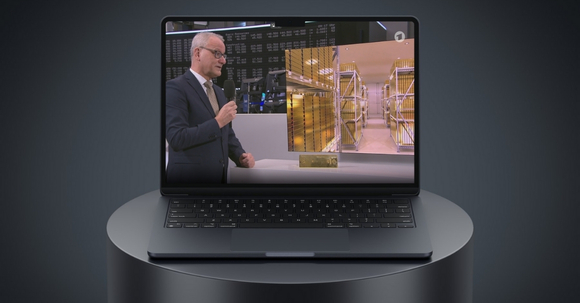
Whether new trends in the precious metals market, exciting background reports or information on upcoming events - we keep you informed throughout the year about everything that moves the industry.
On our LinkedIn channel we regularly publish exclusive insights, event information, expert interviews and the latest market observations. Follow us to make sure you never miss a post and stay in touch with the community.
Our newsletter is even more direct: here you receive selected first-hand information - compact, up-to-date and relevant for anyone who deals with precious metals either professionally or privately.
Partners - News from our supporters
We would like to expressly thank our strong industry partners at the FutureForum Precious Metals 2026, whose commitment has made an active contribution to being able to offer participants a program that is unique in this form in the DACH region.